
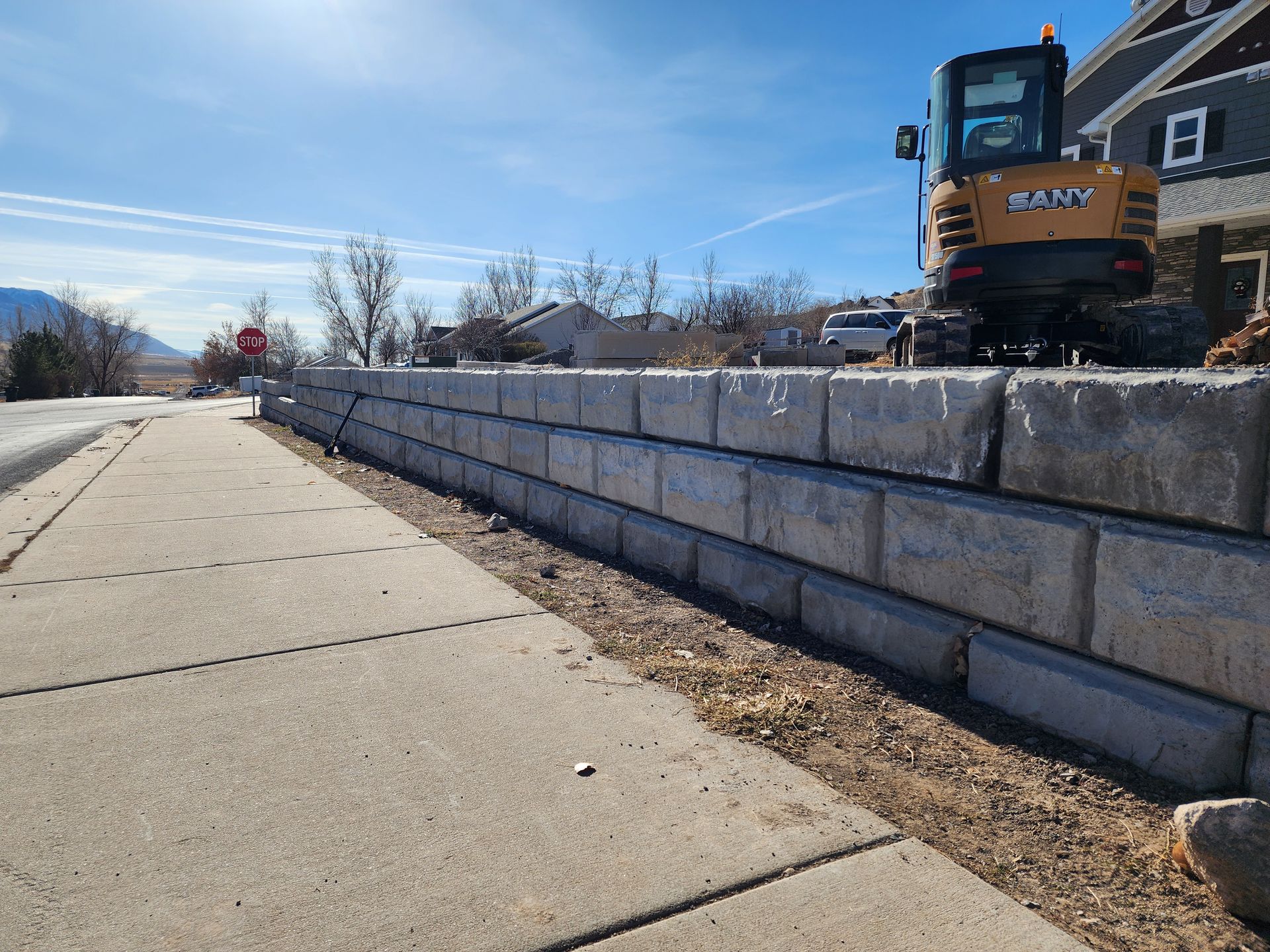
From the outside, excavation looks the same whether it's for a single-family home or a commercial development. But the differences between commercial and residential excavation are significant — affecting everything from planning and permitting to equipment, timeline, cost, and the level of coordination required. Understanding these differences helps property owners and developers set appropriate expectations for their projects.
Scale and Scope
The most obvious difference is scale. A residential foundation excavation might involve removing 100 to 500 cubic yards of material over one to three days. A commercial site development might require moving 10,000 to 100,000 cubic yards over several weeks or months. This difference in volume drives everything else — equipment selection, crew size, hauling logistics, and project duration.
Commercial projects also tend to involve more diverse types of work on a single site. Beyond the primary excavation, a commercial project might include mass grading, utility trenching for multiple systems, retaining wall construction, storm water management, parking lot subgrade preparation, and erosion control. Each of these work types may need to be sequenced carefully with other trades working on the same site.
Regulatory Requirements
Commercial excavation faces significantly more regulatory oversight than residential work. Stormwater pollution prevention plans, environmental impact assessments, traffic control plans, noise ordinances, and erosion control requirements are all more stringent for commercial projects. The permitting process is more complex and time-consuming, often requiring multiple agency approvals before work can begin.
Residential excavation still requires permits and compliance with local codes, but the requirements are generally more straightforward. A residential grading permit and building permit are typically all that's needed, and the approval process is faster.
Equipment and Expertise
Commercial projects require larger and more diverse equipment fleets. Full-size excavators, articulated dump trucks, motor graders, large dozers, and specialized compaction equipment are common on commercial sites. The operators running this equipment need experience with commercial-scale work, GPS-guided systems, and coordinating with multiple trades on an active construction site.
Residential projects can often be completed with a single excavator and a dump truck. The work is more contained, the site is simpler, and the margin for error — while still important — isn't measured in the same terms as a multi-million-dollar commercial development.
Cost Structure
Commercial excavation costs are typically quoted on a per-cubic-yard or per-unit basis for specific work items, often through a formal bidding process. Residential excavation is more commonly quoted as a lump sum for the complete scope of work. Commercial projects involve mobilization costs, bonding requirements, and insurance levels that don't apply to residential work, all of which are factored into the pricing.
One Company for Both
KB Lewis handles both commercial and residential excavation with the same commitment to quality and precision. Whether you're building your family's home or developing a commercial property, contact us to discuss your project requirements and get a detailed estimate tailored to your specific needs.