
Your home is only as strong as the ground it sits on. In Utah, soil conditions vary dramatically from one neighborhood to the next — sometimes even within a single lot. Understanding your soil type and how it interacts with different foundation systems is essential for making smart decisions during the planning phase of your build.
Utah's Common Soil Types
The Wasatch Front sits on a complex geological foundation. Valley floors tend to have clay and silt deposits from ancient Lake Bonneville. Bench areas along the mountains often feature gravel, cobble, and rock. Mountainous areas in Park City, Heber, and beyond may have shallow bedrock with thin topsoil. Each of these conditions presents different challenges and opportunities for foundation construction.
Clay soils are particularly important to understand because they expand when wet and contract when dry. This seasonal movement can cause foundation cracking, uneven settling, and structural damage if the foundation isn't designed to account for it. Utah's clay soils are among the most expansive in the region, making proper engineering and excavation especially critical.
Foundation Types and Their Excavation Needs
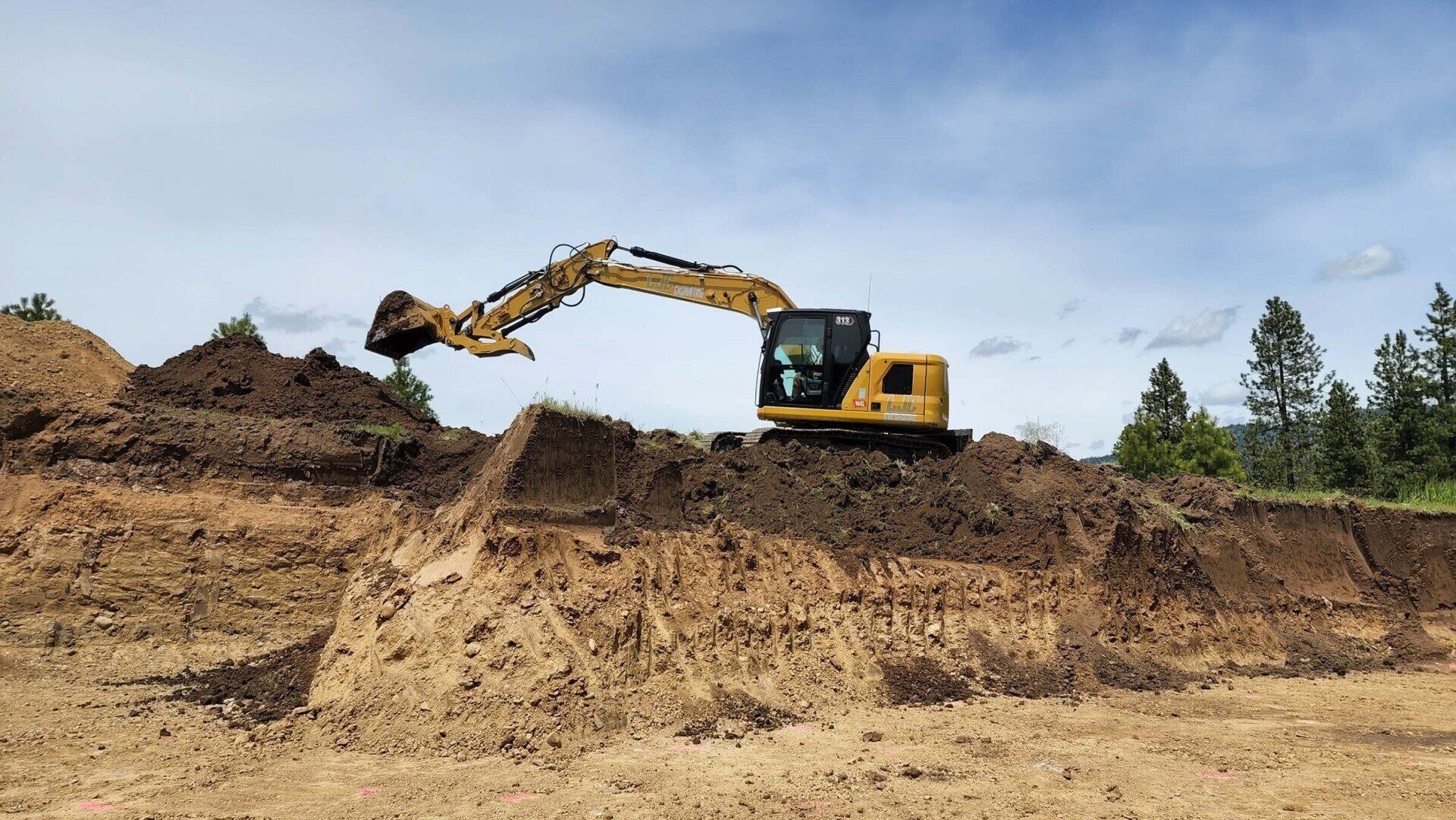
Full basement foundations are the most common choice in Utah residential construction. They provide additional living or storage space and are well-suited to the region's freeze-thaw cycles since the foundation walls extend below the frost line. Excavating for a basement requires removing a significant volume of earth — typically eight to ten feet deep across the full footprint of the home.
Crawlspace foundations sit a few feet above grade on short foundation walls. They require less excavation than a full basement but still need precise digging to the correct depth and dimensions. Slab-on-grade foundations are the simplest from an excavation standpoint, requiring only a shallow dig for footings and compacted fill beneath the slab.
In areas with shallow bedrock or difficult soil conditions, pier and beam foundations may be recommended by your engineer. These require drilling or excavating individual holes for piers that extend to solid bearing material, rather than excavating the full footprint.
How Soil Testing Informs the Process
A geotechnical report is the roadmap for your foundation excavation. It tells your engineer and contractor exactly what soil conditions exist at various depths across your building footprint. This information determines the foundation type, the depth of excavation, whether over-excavation and structural fill are needed, and what compaction specifications must be met.
Without a geotechnical report, you're essentially guessing. And guessing with a foundation can lead to six-figure problems years after the home is built. The cost of a soil investigation — typically $2,000 to $5,000 — is trivial compared to the cost of foundation failure.
The Excavation Contractor's Impact
Precision matters in foundation excavation. Over-digging wastes time and money on additional fill material and compaction. Under-digging means rework. Uneven bottoms create stress points in the foundation. This is where an experienced excavation contractor makes a real difference — our operators at KB Lewis dig to exact specifications, maintain consistent grade across the excavation, and verify dimensions throughout the process.
Planning a new home build in Utah? Schedule a consultation with KB Lewis to discuss your foundation excavation needs and get a detailed estimate based on your specific site conditions.