
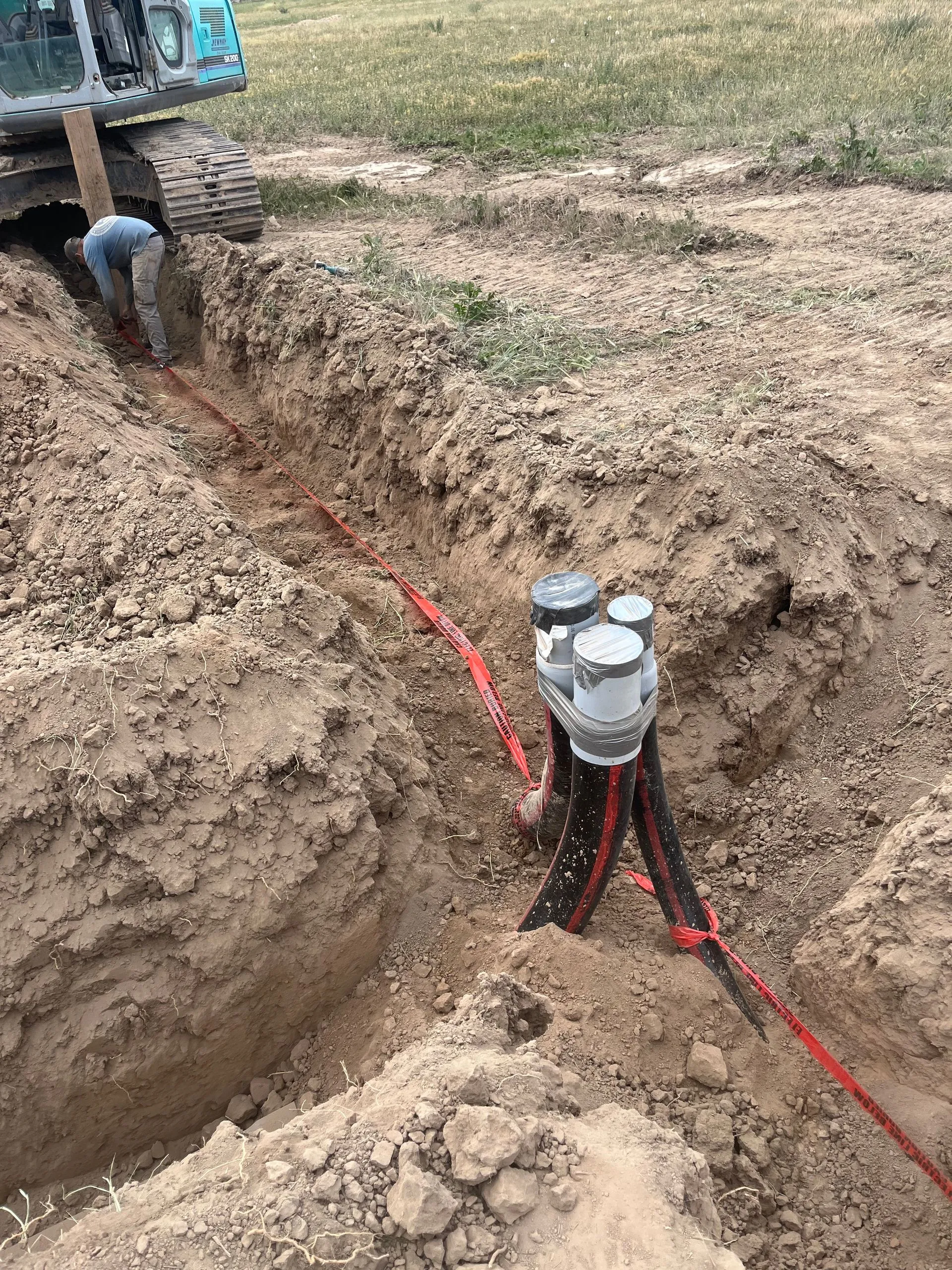
Standing water near your foundation, a perpetually soggy yard, or water seeping into your basement are all signs of a drainage problem. French drains are one of the most effective solutions for redirecting subsurface water away from structures and problem areas. Named after Henry French who popularized the technique in the 1800s, this simple but effective drainage system remains a go-to solution for residential and commercial properties alike.
How a French Drain Works
A French drain is a gravel-filled trench containing a perforated pipe that collects and redirects groundwater. Water naturally flows downhill and follows the path of least resistance. The gravel-filled trench provides that easy path, drawing water away from where it causes problems and directing it to a safe discharge point — typically a lower area of the property, a storm drain, or a dry well.
The system works through gravity, which means no pumps, no electricity, and minimal maintenance once installed. The perforated pipe collects water that enters the gravel, and the gravel itself acts as a filter to prevent soil from clogging the pipe. When properly designed and installed, a French drain can function effectively for decades.
When You Need a French Drain
Several common scenarios call for a French drain installation. Water pooling against your foundation after rain or snowmelt is the most urgent — this moisture can lead to basement leaks, foundation damage, and mold growth. A damp or wet basement, even without visible water, often indicates subsurface water pressure that a French drain can relieve.
Yards with persistent wet spots, soggy lawns, or standing water after irrigation also benefit from French drains. If your property sits at the base of a slope, water flowing downhill can saturate the soil around your home. A French drain intercepted along the slope redirects this water before it reaches your foundation.
The Installation Process
Installing a French drain involves excavation, proper grading, and careful material placement. The trench is typically dug twelve to twenty-four inches wide and eighteen to thirty-six inches deep, depending on the application. The bottom of the trench is graded at a consistent slope — usually one percent or steeper — to ensure water flows to the discharge point.
A layer of gravel is placed in the bottom of the trench, the perforated pipe is set on top with the perforations facing down, and more gravel is added around and above the pipe. Filter fabric is often wrapped around the gravel to prevent fine soil particles from migrating into the drain and reducing its effectiveness over time. The trench is then topped with soil and sod, or left as an exposed gravel trench depending on the application.
Cost and Timeline
A typical residential French drain installation runs between $2,000 and $6,000 depending on length, depth, and site conditions. Most residential installations can be completed in one to two days. The investment pays for itself by protecting your foundation from water damage that could cost tens of thousands to repair.
If you're dealing with water problems around your home, contact KB Lewis for a site evaluation. We'll assess your drainage situation and recommend the most effective solution for your specific conditions.