
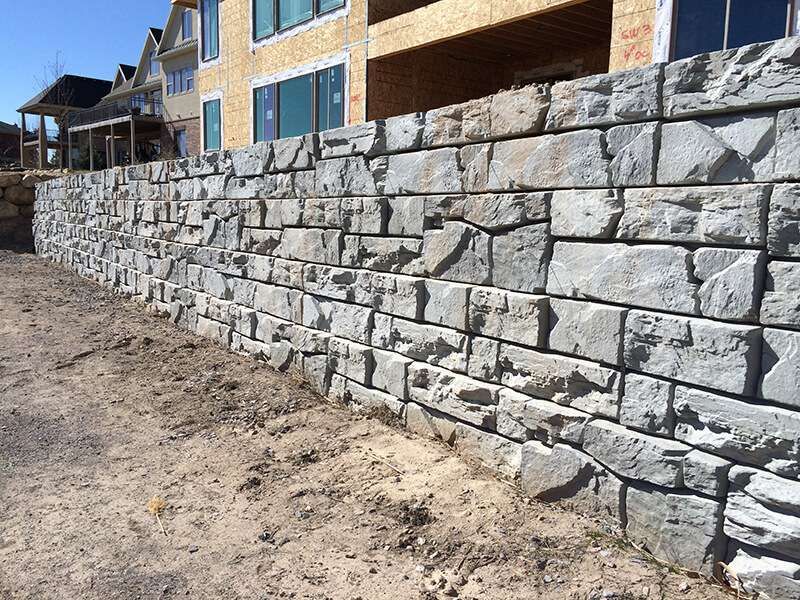
Walk through any neighborhood in Utah and you'll see retaining walls in various states of condition. Some look perfect decades after construction. Others are leaning, cracking, or actively failing within just a few years. The difference usually isn't the wall material or the construction technique — it's the drainage behind the wall.
The Enemy: Hydrostatic Pressure
When water saturates the soil behind a retaining wall, it creates hydrostatic pressure — the force of water pushing against the back of the wall. This pressure can be enormous. A saturated clay soil behind a six-foot wall can exert thousands of pounds of additional force per linear foot that the wall wasn't designed to handle without proper drainage.
Hydrostatic pressure is the number one cause of retaining wall failure. It causes walls to lean forward, crack along mortar joints, bow outward, and eventually collapse. The problem is insidious because it builds gradually. A wall may look fine for years while water slowly saturates the backfill, and then fail suddenly during a heavy rain event or spring snowmelt when the soil becomes fully saturated.
How Proper Drainage Works
The solution is straightforward: give water a path to escape before it can build up behind the wall. A properly designed drainage system includes a perforated drain pipe at the base of the wall, clean gravel or drainage aggregate behind the wall, and filter fabric to prevent fine soil from clogging the drainage layer.
The drain pipe collects water that percolates through the backfill and directs it to a safe discharge point at the end of the wall. The gravel creates a fast-draining zone immediately behind the wall face, preventing water from making direct contact with the wall and allowing it to drain to the pipe quickly. The filter fabric keeps fine soil particles from migrating into the gravel and reducing its drainage capacity over time.
Weep Holes: Your Wall's Pressure Relief Valves
Weep holes are small openings near the base of a retaining wall that allow trapped water to drain through the face of the wall. They serve as a backup drainage system and a visible indicator of whether water is being managed properly. If you see water flowing from weep holes after rain, that's actually a good sign — it means the drainage system is working and water isn't building up behind the wall.
The absence of weep holes in a block or concrete wall is a warning sign. Without them, any water that bypasses the drainage system has no escape route and will build hydrostatic pressure against the wall.
What to Look For in Quality Construction
When hiring a contractor for retaining wall construction, ask specifically about their drainage approach. A quality contractor will describe the drain pipe specification, the type and depth of drainage aggregate, the filter fabric system, and the discharge plan for collected water. If a contractor's answer to drainage questions is vague or dismissive, look elsewhere.
At KB Lewis, drainage is engineered into every retaining wall we build. It's not an optional add-on — it's a core part of the construction process that ensures our walls perform for decades. Learn more about our retaining wall services or schedule a consultation to discuss your project.