
If you're building on a property outside municipal sewer service — which includes many areas in rural Utah County, Wasatch County, and Summit County — you'll need a septic system. The excavation work involved in a septic installation is significant, and understanding the process helps you plan effectively and avoid costly mistakes.
The Perc Test: Where It All Starts
Before any septic system can be designed or installed, your site needs a percolation test. This test measures how quickly water drains through the soil on your property, which determines what type of septic system is appropriate and where it can be placed. A licensed soil scientist or engineer conducts the test by digging test holes and measuring the rate at which water percolates through the soil.
Perc test results directly impact your project. Fast-draining sandy soils might allow a conventional gravity-fed system, while slow-draining clay soils may require an alternative system like a pressure distribution or mound system. In some rare cases, soil conditions may not support any type of septic system, which is why performing the perc test early in the planning process is critical.
System Types and Their Excavation Needs
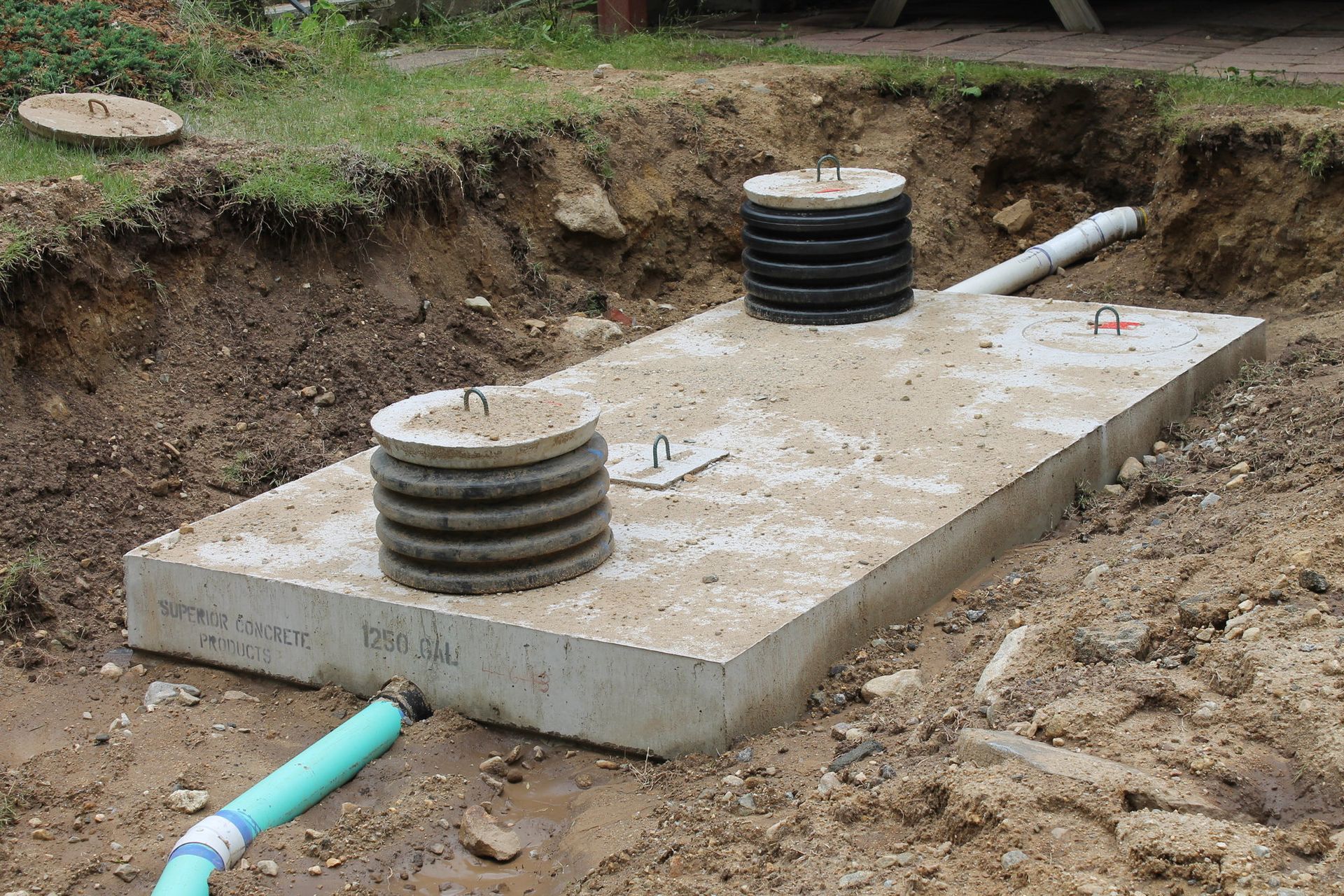
Conventional septic systems consist of a tank and a drain field. The excavation involves digging a hole for the tank (typically 1,000 to 1,500 gallons for a residential home), trenching for the inlet and outlet pipes, and excavating the drain field trenches. This is the most straightforward and affordable option when soil conditions allow it.
Pressure distribution systems require similar excavation but with the addition of a pump chamber and pressurized distribution piping. Mound systems are the most excavation-intensive, requiring the construction of a raised bed of sand and gravel above the natural soil level. These systems are common in areas with high water tables, shallow bedrock, or poor percolation rates.
The Installation Process
Once permits are approved and the system is designed, the excavation process moves quickly. A typical residential septic installation takes two to four days of excavation work. This includes setting the tank, running all piping from the house to the tank and from the tank to the drain field, excavating and preparing the drain field, and backfilling and grading the entire system.
Proper compaction and grading around the system are critical. The area around the tank and piping needs to be carefully backfilled to prevent settling, and the drain field area needs proper drainage to function correctly. These details separate a quality installation from one that will cause problems in a few years.
Costs and Timeline
A conventional septic system installation in Utah typically costs between $8,000 and $15,000, including excavation, materials, and installation. Alternative systems like mound systems can range from $15,000 to $30,000 or more depending on complexity. These costs include the excavation work, which is a significant portion of the total.
If you're planning a build on a rural Utah property, contact KB Lewis early in the process. We work with septic designers and engineers to ensure the excavation portion of your installation is done right, on time, and within budget.