
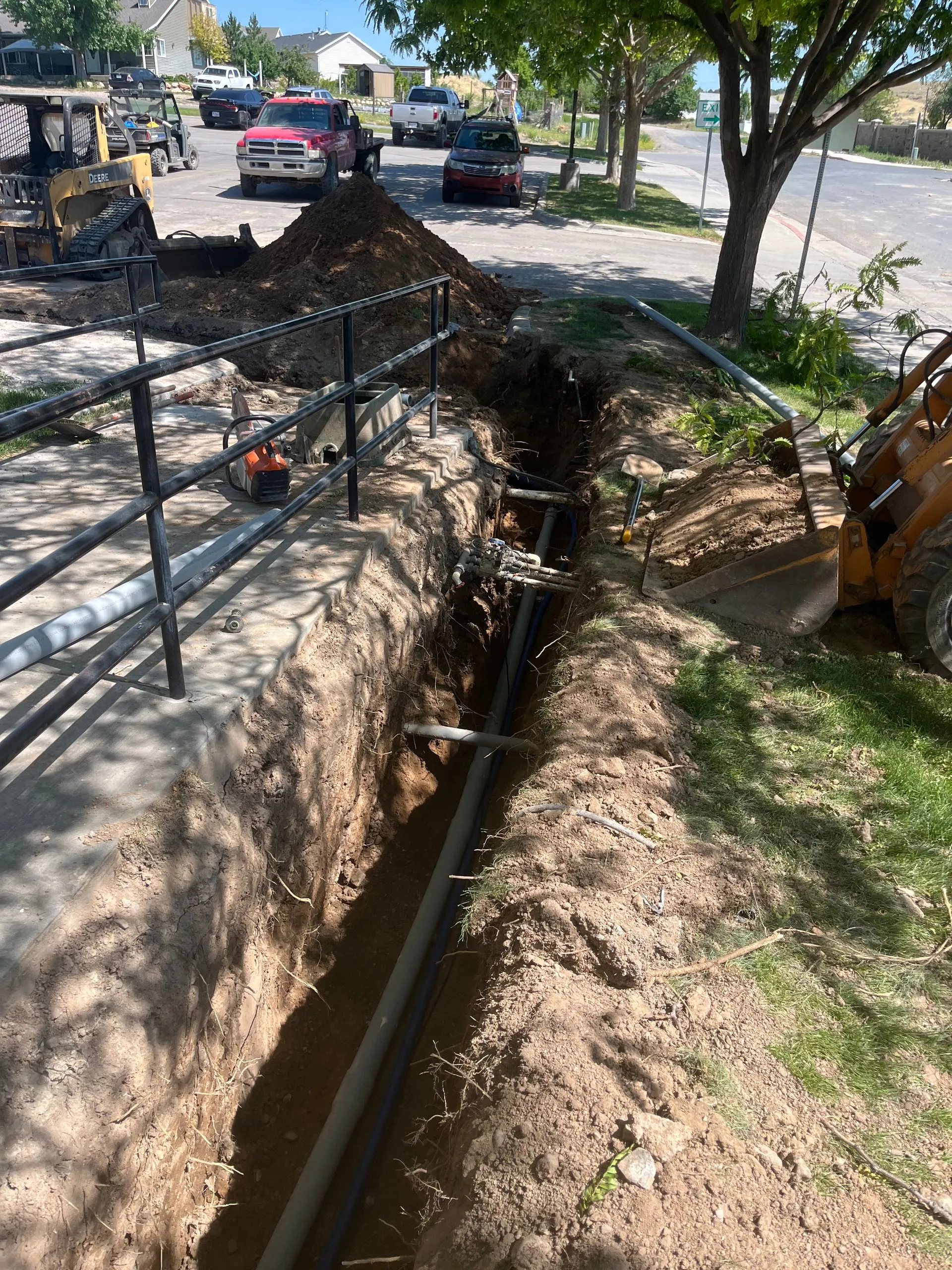
Every year across the United States, there are hundreds of thousands of incidents involving damage to underground utility lines during excavation. Some result in property damage and project delays. Others cause injuries and deaths. In Utah, the law is clear: you must contact 811 and have underground utilities located before any excavation work begins. It's not optional, and it's not something experienced contractors take lightly.
What's Underground
Modern properties sit above a complex network of underground infrastructure. Natural gas lines, high-voltage electrical cables, water mains, sewer lines, telecommunications cables, and fiber optic lines may all be running beneath or near your property. These utilities may have been installed at different times by different companies, and their exact locations are often not where you'd expect them to be.
The consequences of hitting these lines range from inconvenient to catastrophic. A severed telecommunications cable disrupts service for potentially hundreds of customers. A damaged water main can flood a construction site and adjacent properties. A hit gas line creates an explosion risk that endangers everyone in the area. And contact with a high-voltage electrical line can be instantly fatal.
How the 811 Process Works in Utah
Utah law requires that you contact 811 at least two business days before any excavation work begins. When you call, you'll provide the location and description of your planned work. The 811 center then notifies all utility companies with infrastructure in your area, and they send locators to mark the approximate location of their lines using color-coded paint or flags on the ground.
Each utility type has its own color code: red for electrical, yellow for gas, blue for water, green for sewer, and orange for telecommunications. After the locating is complete, your excavation contractor knows where to dig carefully, where to hand-dig for exposing utilities, and where to avoid altogether.
The Contractor's Responsibility
Professional excavation contractors take utility locating seriously because they understand the stakes. At KB Lewis, we verify that utility locates are current and accurate before any equipment breaks ground. If we're working near marked utilities, we use careful excavation techniques — including hand digging and vacuum excavation when necessary — to expose and protect the lines.
We also watch for unmarked utilities, which are more common than most people realize. Private utilities on your property (like a gas line from your meter to a barbecue or a water line to an outbuilding) are not included in 811 locates. Experienced operators stay alert for signs of unmarked lines and stop work immediately if anything unexpected is encountered.
Your Role as the Property Owner
Even though your contractor will manage the excavation process, you as the property owner should be aware of any private utilities on your property and communicate them to your contractor. Old irrigation lines, propane lines, electrical runs to outbuildings, and other private utilities won't be marked by 811 locators. Share any knowledge you have about what's underground, and consider providing old site plans or utility records if available.
Safety is non-negotiable on every KB Lewis jobsite. Contact us to learn more about our safety practices and how we protect your property during excavation.