
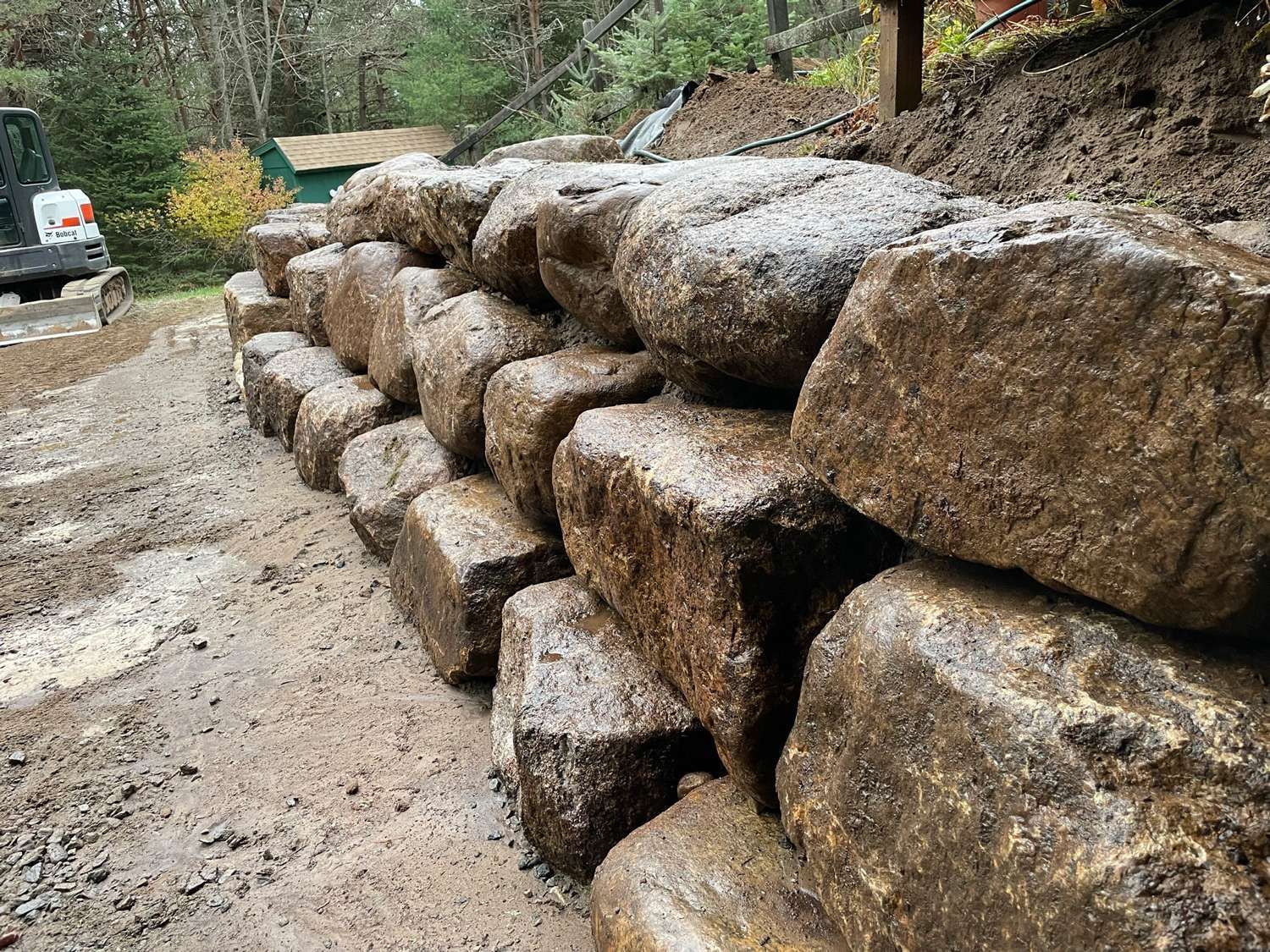
Retaining walls are a critical investment for Utah properties, especially those on sloped terrain where soil stability and erosion control are essential. When the time comes to build a retaining wall, homeowners and property developers face a fundamental decision: should you choose natural stone boulders or engineered concrete blocks? Both options have distinct advantages and ideal applications. Understanding the differences will help you make the right choice for your property, budget, and aesthetic goals.
The Case for Natural Stone Boulder Walls
Natural stone retaining walls, constructed from stacked boulders or quarried rock, offer unmatched aesthetic appeal. Each stone is unique, creating a rustic, timeless appearance that integrates beautifully with Utah's natural landscape. Boulder walls often become signature features of properties, enhancing curb appeal and property value in ways that few other improvements can match.
From a construction standpoint, boulder walls offer excellent drainage characteristics. The gaps between irregularly shaped stones naturally allow water infiltration and drainage behind the wall, which is critical for preventing hydrostatic pressure buildup. This drainage advantage means fewer expensive drainage systems are required behind the wall. Boulder walls are also highly durable—quality stone can last for generations with minimal maintenance, making them a long-term investment.
The primary drawback of boulder walls is cost. Natural stone is expensive to source, transport, and install due to the labor-intensive stacking process. Boulder walls typically require skilled craftspeople to ensure proper engineering and longevity. Additionally, very tall or load-bearing boulder walls may require extensive geotechnical analysis and reinforcement to meet engineering standards.
The Case for Concrete Block Retaining Walls
Engineered concrete block retaining walls are manufactured units designed for structural consistency and reliable performance. Blocks come in uniform sizes, making installation predictable and efficient. This consistency translates to faster construction timelines and more predictable project costs. Concrete block walls are engineered to specifications, meaning they can reliably handle specific heights and soil loads with documented safety factors.
From a cost perspective, concrete block walls are generally more budget-friendly than natural stone. The standardized manufacturing and installation process reduces labor hours and material waste. For homeowners working with budget constraints, concrete block walls offer a practical solution that still provides excellent structural performance and durability.
Concrete blocks offer versatility in design as well. Modern concrete units come in various colors, finishes, and styles—segmental retaining wall (SRW) systems can mimic the appearance of natural stone or provide a clean, contemporary look depending on your preference. Maintenance is straightforward, and repairs are simple when individual blocks need attention.
The primary consideration with concrete block walls is drainage. While modern systems include integrated drainage solutions, they require more careful design and maintenance compared to naturally porous boulder walls. Additionally, while engineered concrete blocks are durable, they may not offer the multi-generational longevity of quality natural stone in the harshest conditions.
Aesthetic Considerations and Property Impact
Your property's visual appearance is a significant factor in this decision. Natural stone boulder walls create an organic, high-end look that appeals to properties in scenic areas and upscale neighborhoods. The natural variation in stone color and texture creates visual interest that artificial materials struggle to replicate. If aesthetics and curb appeal are primary concerns, especially for upscale residential or hospitality properties, natural stone is the superior choice.
Concrete block walls, particularly modern segmental systems with textured finishes, can also look attractive in the right setting. They work particularly well in contemporary designs, commercial applications, and properties where a clean, uniform appearance is desired. In suburban and commercial settings, concrete block walls are often the preferred choice.
Structural Strength and Engineering Requirements
Both materials, when properly engineered and installed, provide excellent structural performance. Concrete block walls have the advantage of uniform, predictable engineering. A properly designed SRW system with engineered blocks and geogrid reinforcement can reliably handle significant soil loads and heights. This consistency makes engineering calculations straightforward and inspections reliable.
Natural stone walls, when properly constructed by experienced craftspeople, are equally durable and strong. However, engineering boulder walls requires more careful analysis because the stones are irregular, and their bearing characteristics are less uniform. A skilled engineer and experienced stone mason can create boulder walls that perform beautifully for decades, but the engineering process is more complex.
Drainage and Long-Term Performance
Drainage is critical to retaining wall longevity. Improper drainage leads to hydrostatic pressure buildup, which can cause wall failure, settling, or damage. Natural boulder walls excel in this regard—their irregular construction naturally allows water to permeate and drain through the wall. This natural drainage reduces or eliminates the need for French drains and collection systems behind the wall.
Concrete block walls require more deliberate drainage design. Behind the wall, landscape fabric, perforated drain pipe, and gravel beds must be installed to manage water. When properly designed and maintained, concrete block walls provide excellent drainage. The key is ensuring these drainage components are installed correctly and that maintenance keeps them functioning over time.
Best Use Cases for Each Option
Choose natural stone boulder walls when:
- Aesthetic appeal and natural appearance are top priorities
- Your property is in a scenic, high-visibility location
- You're planning a long-term property improvement and value generational durability
- Your budget allows for the premium cost of quality stone and skilled installation
Choose concrete block walls when:
- Budget efficiency is important to your project
- You need faster construction and predictable timelines
- Your wall is engineered for significant heights or load-bearing requirements
- Your property aesthetic calls for a clean, contemporary, or uniform look
How KB Lewis Helps You Choose
At KB Lewis Excavation, we've built hundreds of retaining walls in Utah—both boulder and block systems. We understand the unique characteristics of Utah soil, weather patterns, and terrain. We work with you to evaluate your property, understand your goals, and recommend the solution that balances structural reliability, aesthetic appeal, and budget reality.
Our experienced team designs and builds retaining walls that perform beautifully for years to come. Whether you're leaning toward natural stone or engineered concrete, we ensure proper engineering, skilled installation, and comprehensive drainage design. Contact us today for a consultation about your retaining wall project.